
Stilt Villages in Colombia: What They Are, Where They Are, and How to Visit Them from Santa Marta
In the Colombian Caribbean, there is a region where the land is not the center of life. There, the houses aren't built on streets or concrete, but on wooden stilts that rise out of the water. They are the stilt villages, communities that have learned to live alongside the lagoon and to build homes right in the middle of it.
Visiting a stilt-house village is not simply a matter of sightseeing. It is stepping into a cultural and natural ecosystem that has withstood environmental, social, and historical changes, keeping alive a unique way of living in the region.
What are stilt villages?
A stilt house is a dwelling built on wooden stilts that rise above the water or floodplains. This architectural technique allows communities to adapt to lagoon ecosystems without completely altering them.
In Colombia, the Stilt Villages The most representative ones are found in the Ciénaga Grande de Santa Marta, one of the lagoon systems one of the most important in the Caribbean and a strategic ecosystem due to its biodiversity and mangrove systems.
Stilt villages such as New Venice, Buenavista and Trojas de Cataca, are unique communities built on the water, where life revolves around the canals and small-scale fishing. These communities are part of a mangrove ecosystem and waterways of international importance, declared UNESCO Biosphere Reserve and RAMSAR Site, and partially protected by National Natural Parks of Colombia.
Here, water is a road, a marketplace, a social space, and a daily source of sustenance. The streets are canals. People get around by canoe. Artisanal fishing sets the pace of life.
Where are the stilt villages in Colombia?
There are three main stilt-house communities in the Ciénaga Grande:
New Venice
Buenavista
Cataca Trogs
These communities are located between the municipalities of Swamp and Old Town, in the department of Magdalena. From Santa Marta, you reach the boarding point by land and then take a boat through the Ciénaga's canals.
How can I visit the stilt villages in Colombia?
Visiting the stilt villages is not like going to a traditional tourist destination. It is an experience in a living, breathing community, where people have built their lives on the water for generations.
Currently, there are two main ways to learn about them:
Option 1: Organized tour from Santa Marta (recommended)
The easiest, safest, and most rewarding way to visit the stilt houses is through an organized tour.
This type of experience includes transportation, logistical coordination, and guidance, allowing you to focus on what matters most: understanding the local culture and the ecosystem of the Ciénaga Grande.
In addition, it fosters a more respectful relationship with communities, avoiding invasive or disruptive practices.
👉 Perfect if you're looking for a well-rounded, hassle-free experience with a cultural focus.
Option 2: Go on your own
It's also possible to try to get there on your own, but that involves more complicated logistics.
You'll need to arrange ground transportation to areas near Ciénaga Grande and then make arrangements for the boat ride, which isn't always easy or well-organized.
👉 It's not the best option if you're not familiar with the area or if you're looking for a seamless experience.
How much does it cost to visit the stilt villages?
The price of a tour to the stilt villages may vary depending on the type of tour, the number of people, and the services included.
In general, the values tend to fall within a range of approximately:
💲Shared tours:
- 1 Person $600,000 COP
- 2 People $250,000 COP per person
- 3 or more people: $220,000 COP per person
💲Private experiences:
- 1 Person $600,000 COP
- 2 People $270,000 COP per person
- 3 or more people: $250,000 COP per person
They typically include:
- Round-trip transportation by boat
- Support
- Cultural Interpretation of the Territory
- Food
- Comprehensive Auto Insurance
- Coffee or Snack
👉 Important: Not all tours include ground transportation or additional activities, so it's important to review each option before booking or making a request.
How do I get to the Ciénaga Mágica de Macondo Tourist Lodge?
The Macondo's "Magical Marsh" Tourist Inn It is located at Kilometer 55 on the road from Ciénaga to Barranquilla.
If you leave from Santa Marta by road using a private car, taxi, Uber, or bus that covers that route, it will take you between 35 and 40 minutes. If you leave from Barranquilla, you should take the route to Santa Marta; it will take you 1 hour and 45 minutes.
From Cartagena or Valledupar, it can take 3 to 4 hours to reach the meeting point, so we recommend arriving a day early so you'll have time to rest.
Recommendations
For your convenience and to ensure you arrive on time, we recommend arranging transportation in advance, especially during peak season.
What happens after you arrive at the rest stop?
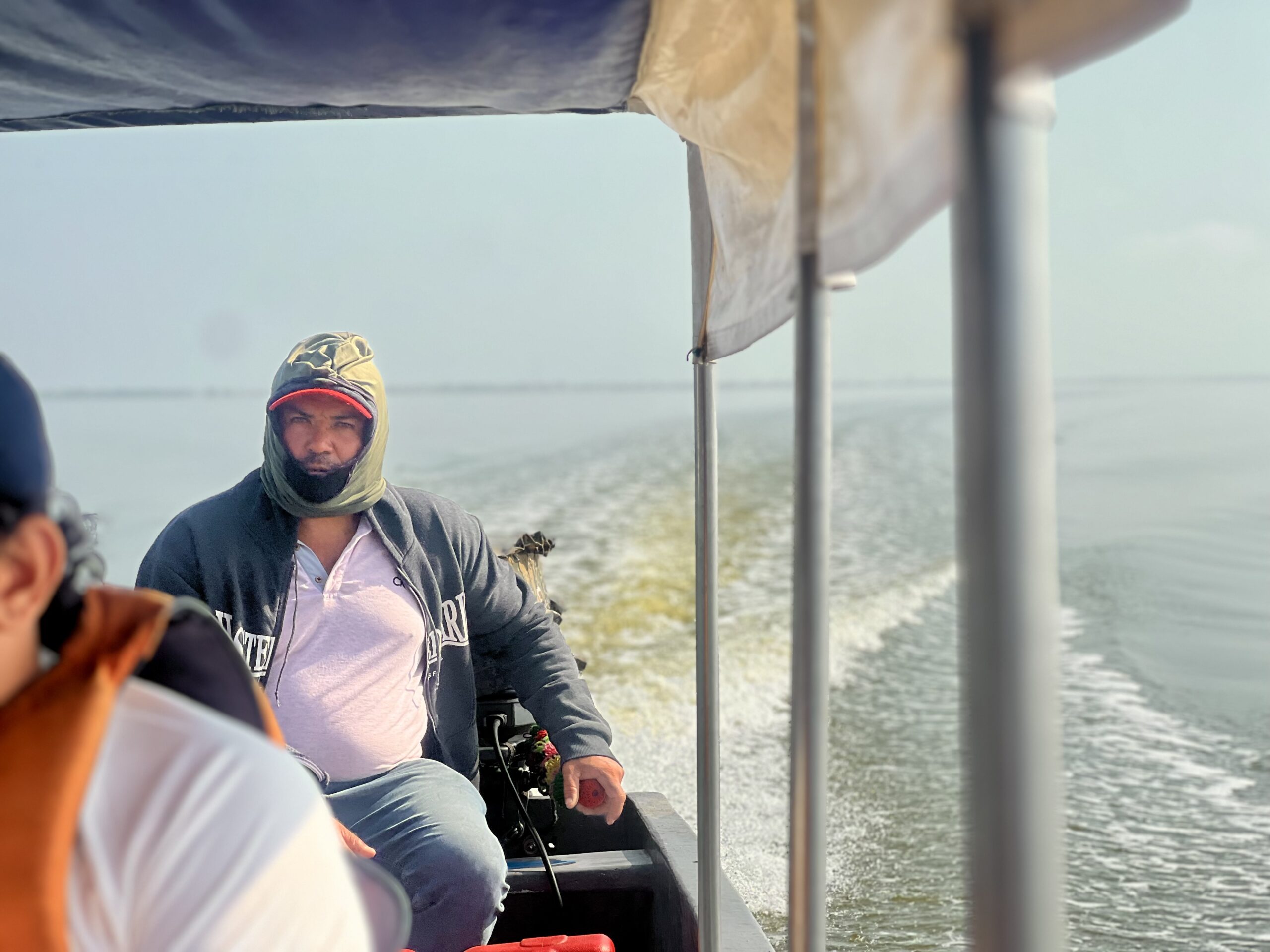
From the rest stop, the boat ride takes you along the Ciénaga Grande de Santa Marta, a lagoon ecosystem connected to the Magdalena River and the Caribbean Sea.
The The boat tour can take between 1 hour and 1 hour and 30 minutes, depending on the community you want to visit and the weather conditions.

History and Origins of Amphibious Communities
Pile-dwelling settlements have ancient roots linked to communities that understood the dynamics of wetlands and developed strategies to adapt to the aquatic environment.
Over time, artisanal fishing became the economic and cultural foundation of these communities. For decades, the Ciénaga Grande was one of the main sources of fish in the Colombian Caribbean.
However, interventions in water connectivity, environmental changes, and complex social processes have disrupted the ecosystem’s balance. Despite this, the stilt villages remain a symbol of resilience and cultural continuity.
Historical Origins
The stilt villages emerged in the mid-19th century, when fishermen along the Magdalena River and in nearby areas began to to rest directly on the waters of the swamp, making the most of fishery resources and adapting to the dynamics of the ecosystem.
This construction on stilts allowed them to protect against seasonal flooding and make better use of canal navigation
Reference: National Natural Parks of Colombia
Name and History
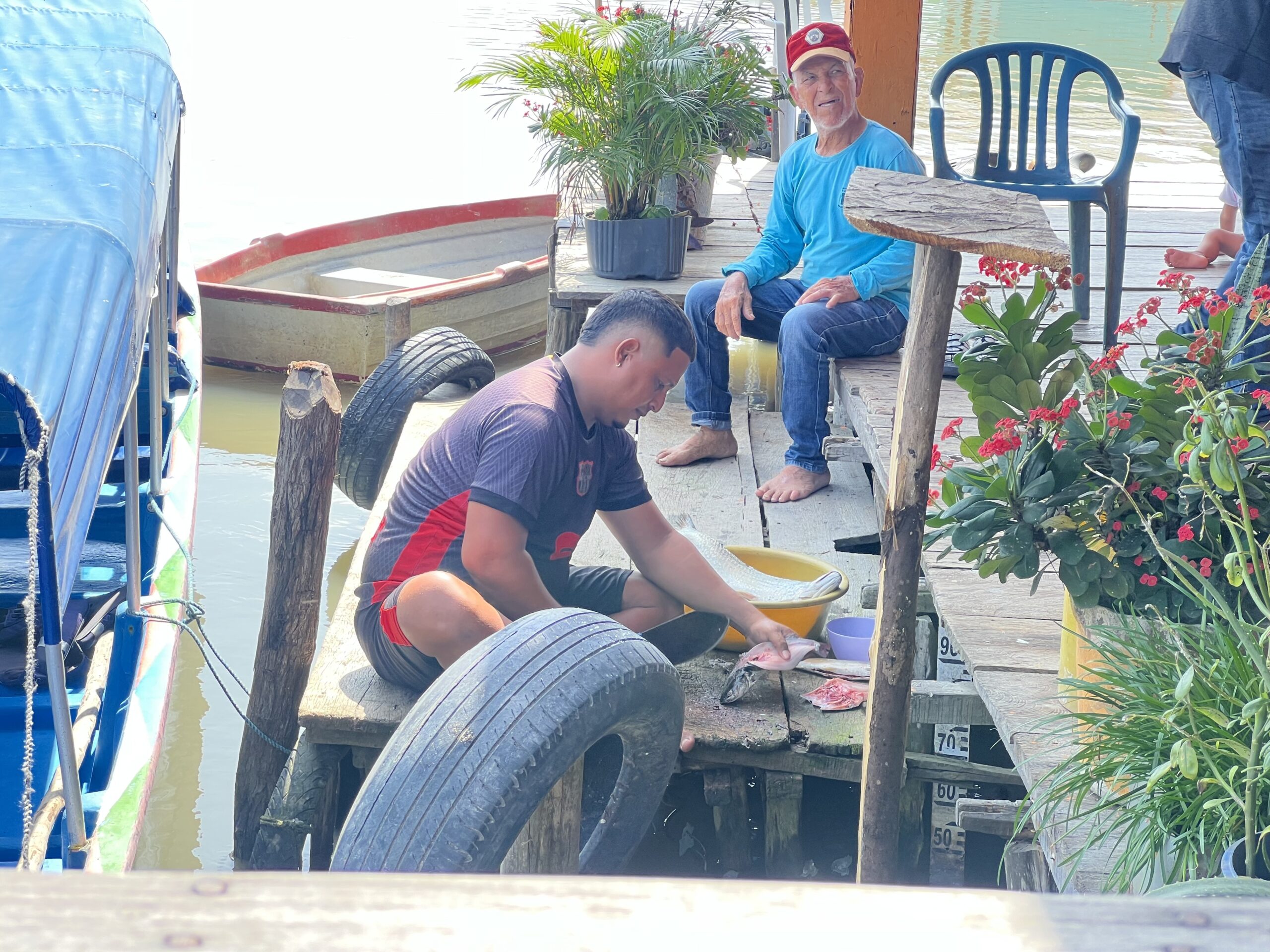
New Venice, known locally as El Morro, has its origins in 1847 and has evolved over time, adapting its homes to the tides and the community's growth.
Reference: UNESCO — Ciénaga Grande Biosphere Reserve
Historical Memory
- Over the years, communities have faced challenges such as armed conflicts, natural disasters, and changes in the ecosystem, building resilience and developing unique forms of community organization.
Environmental Importance of Ciénaga Grande
The Ciénaga Grande de Santa Marta It performs fundamental ecological functions:
Water Regulation and the Connection Between the River and the Sea
Natural Protection Against Storms
Habitat of Resident and Migratory Birds
Fishery Production
Mangrove Conservation
The stilt villages are part of this system. Their traditional way of life depends directly on the balance of the ecosystem.
Ecological Context of the Ciénaga Grande
The Ciénaga Grande de Santa Marta is the Colombia's largest lagoon system, consisting of a network of marshes, rivers, and canals that combine freshwater from the Magdalena River, brackish water from the Caribbean, and rainwater.
Hosts 400,000 hectares of mangroves, 146 species of freshwater and brackish-water fish, 199 species of migratory birds, and unique aquatic flora, fulfilling essential ecological functions: water regulation, storm protection, and biodiversity conservation
Reference: NGO Biodiversa Colombia Foundation

Current Environmental Problems and Solutions
Issues
Loss of mangroves and the deterioration of waterways due to hydraulic projects and pollution.
Invasive Species: Hydrilla which clogs pipes and reduces the oxygen content in the water.
Decline in Fish Species due to changes in water flow and salinization.
Local and Government Solutions
The community organizes channel cleanups and mangrove conservation programs.
Projects of the National Natural Park and Environmental NGOs support the ecosystem's recovery.
Responsible and sustainable tourism, such as the tours offered by Round Trip Travel SMR, helps generate alternative sources of income that reduce the pressure on natural resources.

What is life like in a stilt village?
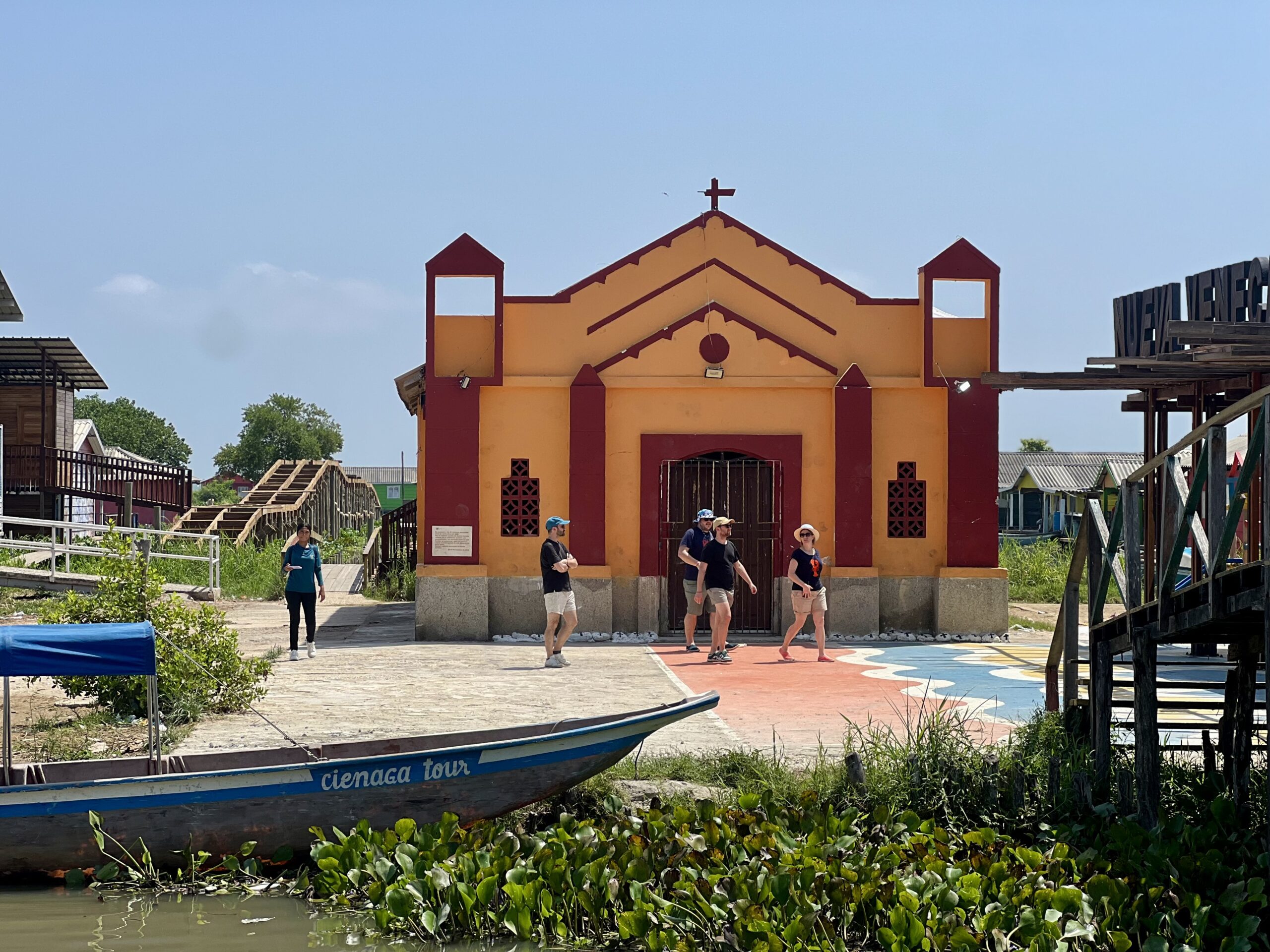
Everyday Life runs along interconnected wooden platforms. The homes, the school, the church, and the small shops are built on the water.
The sound of a canoe's motor replaces the noise of traffic. Fishing nets dry in the sun. Children learn to navigate the walkways from an early age.
The environment dictates specific dynamics: tides, fishing seasons, and changes in water salinity.
Everything affects daily life:
Daily life is closely tied to water and small-scale fishing.
Oral traditions, festivals, and navigational knowledge are passed down from generation to generation.
Social structures are geared toward cooperation: everyone participates in fishing, canal maintenance, and community activities.
Fun Facts and Additional Context
The word stilt house It comes from the architectural technique of building on piles, adapted to a lagoon ecosystem.
Some houses have as many as more than 100 years, constantly rebuilt to withstand tides and storms.
Ciénaga Grande is a RAMSAR Site, emphasizing its international ecological importance.
The Population of Buenavista has 1,200 residents, in 2019, the census recorded 200 homes.
The Population of Nueva Venecia has 3,500 residents in about 500 colorful houses.
Can you visit the stilt villages?
Yes, it is possible to visit them. However, it is important to understand that this is not a traditional tourist destination.
These are vibrant communities with their own dynamics. Visitors should approach them with respect, cultural understanding, and environmental awareness.
Some general recommendations:
Ask for permission before taking photographs
Do not enter private spaces without permission
Avoid generating waste
Understanding that the experience is cultural, not theatrical
Access is generally by boat from the mainland, either from Ciénaga or from areas near Santa Marta.
If you'd like to plan a visit, it's a good idea to learn as much as you can about the conditions, the environmental context, and the community dynamics so that your experience is respectful and enriching.

You can explore Visiting the Stilt Villages Safely and Respectfully, sailing through canals, getting to know the local culture and learning about the ecosystem of the Ciénaga Grande.
Check out our Stilt-House Villages Tour, where we offer Guided tours and educational experiences, supporting the community and contributing to the conservation of the area.
Tour of the Stilt Villages of Ciénaga Grande de Santa Marta.
Are the stilt villages worth visiting?
Yes, but not for the usual reasons people travel.
Visiting the stilt houses is neither a luxury experience nor a form of superficial entertainment. It is an opportunity to understand another way of living in the region, where water is not an obstacle but rather a part of daily life.
You don't come here to “see the sights”; you come to observe, listen, and understand.
👉 If you're looking for an authentic, cultural, and unique experience, it's definitely worth it.
What is there to see in the stilt villages?
During the visit to places such as New Venice or Buenavista, you'll see:
- Homes built on wooden piles
- Channels that function as streets
- Schools and Churches on the Water
- Everyday activities such as small-scale fishing
- Community activities tailored to the local context
Beyond the places themselves, what matters most is the interaction with the region and its people.
Tips Before Visiting the Stilt Houses
Before trying this experiment, keep the following in mind:
- Wear comfortable, breathable clothing
- Sun protection (the water is very reflective)
- Maintain a respectful attitude toward communities
- Don't expect a mass-tourism experience
- Avoid making noise or disrupting local life
👉 Remember: you're entering an inhabited area, not a tourist park.
Tour of the stilt villages from Santa Marta
If you want to enjoy this experience in an organized, safe, and respectful way, you can do so through our tours to the stilt villages.
We operate on the principle of small groups, avoiding negative impacts and prioritizing a genuine connection with the local area.
More Than Just a Postcard: An Amphibious Territory.
Stilt villages are neither an architectural oddity nor a visual curiosity. These are communities that have built their identity around water.
Visiting these regions means changing your perspective: understanding that the Caribbean isn’t just about beaches and conventional tourism, but also lagoons, mangroves, and an amphibious culture.
And if you ever decide to get to know them, it's worth doing so with patience, respect, and a willingness to listen.
Frequently Asked Questions About Stilt Villages FAQ
Where are the stilt villages in Colombia?
They are found in the Ciénaga Grande de Santa Marta, mainly in communities such as Nueva Venecia and Buenavista.
Is it possible to visit New Venice without a tour?
Yes, but it requires coordinating land and water transportation, which can be complex.
Is it safe to visit the stilt houses?
Yes, as long as it is done in an organized manner and with respect for the dynamics of the region.
How long does the tour last?
Usually between half a day and a full day, depending on the carrier.


 Español de Colombia
 English
 Français